Underpinning Inspection NYC: Complete Code Guide for Contractors

Updated: 6 days ago
NYC foundation projects require constant monitoring once digging begins beneath an existing building's footing. A single oversight in an underpinning inspection NYC can trigger a DOB stop-work order. AKS Architectural and Engineering Services LLP helps project managers maintain structural safety throughout every phase of the build.
Schedule your underpinning inspection NYC today. Call (646) 396-1924 or book online at EZTR1.com to keep your foundation work compliant and on schedule.
An underpinning inspection NYC is a required safety check that proves a building is safe when work happens beneath its base or footing. Under the 2022 NYC Building Code section BC 1705.25.4. These checks must be constant to keep the structure secure and protect adjacent properties while deep soil work is active. The NYC Department of Buildings requires a registered agency to monitor every step, from the first pier excavation to the final load transfer. By hiring AKS Architectural and Engineering Services LLP, owners can meet all DOB NOW filing requirements and ensure every foundation element complies with the latest city codes.
Compliance starts with knowing which codes apply to your specific site and how the city enforces foundation safety. The following question-based sections walk through every compliance layer your project needs.
What Are the Code Requirements for Underpinning Inspection NYC?
The NYC Building Code sets the legal standard for all underpinning operations within the five boroughs. Before 2022, section BC 1704.9.1 governed these inspections. The 2022 NYC Construction Code replaced that section with BC 1705.25.4, which expands the scope significantly. Under this new framework, underpinning requires continuous special inspection for structural stability throughout active work periods.
Key code requirement: All underpinning work in NYC requires continuous special inspection under BC 1705.25.8.3. With an approved Special Inspection Agency filing a TR1 form through DOB NOW before any permit is issued.
The shift to the 2022 NYC Construction Code
The new section, BC 1705.25.4, covers all support operations for buildings and adjacent property. This update is more than a simple renumbering. It expands the scope of what inspectors must evaluate. For example, BC 1705.25.4.1 mandates that any new foundation elements installed during underpinning must be inspected as permanent installations. This ensures the support system remains structurally sound for the life of the building.
Code Section | BC 1704.9.1 (2008/2014 Code) | BC 1705.25.4 (2022 Code) |
Scope | Underpinning operations for pier foundations | Underpinning and alternate methods of support for all buildings and adjacent property |
Cross-Reference | Sections 1704.19 and 1814 | Sections 1704.19, 1814, and 1705.25.8.3 |
New Foundation Parts | Not explicitly stated | Must be inspected as permanent installations (1705.25.4.1) |
Inspection Frequency | Special inspection required (continuous implied) | Explicitly requires continuous special inspection for structural stability (1705.25.8.3) |
Structural stability requirements
A critical element of the code is the link to structural stability. Under BC 1704.19, the special inspector must monitor how the work affects the building's existing structural system. This is essential because underpinning transfers heavy loads to new soil or rock strata. Any unanticipated soil movement can cause cracking or structural failure. AKS Architectural and Engineering Services LLP has managed these risks for 40 years, helping builders comply with BC Section 1814 to maintain solid foundations throughout the work.
Continuous versus intermittent inspection
The law is unambiguous about inspection frequency. Per BC 1705.25.8.3, underpinning requires continuous special inspection. A qualified inspector must be present during all active underpinning operations to monitor structural stability in real time. This level of oversight prevents accidents before they develop. Intermittent checks are insufficient when excavation occurs beneath an existing wall or footing.
How Do You File DOB Notifications for Underpinning Work?
NYC DOB enforces strict notification procedures for foundation work. Missing a filing deadline can result in fines, permit revocation, or a full stop-work order. One major regulatory change took effect in July 2025: underpinning plans now require a full DOB review. The previous practice of relying on a professional seal alone is no longer permitted for these plans.
Filing deadline: Contractors must submit an Earthwork and Underpinning Notice to the DOB between 24 and 48 hours before any excavation begins. Failure to submit this notice can result in fines and project delays.
Earthwork and Underpinning Notice requirements
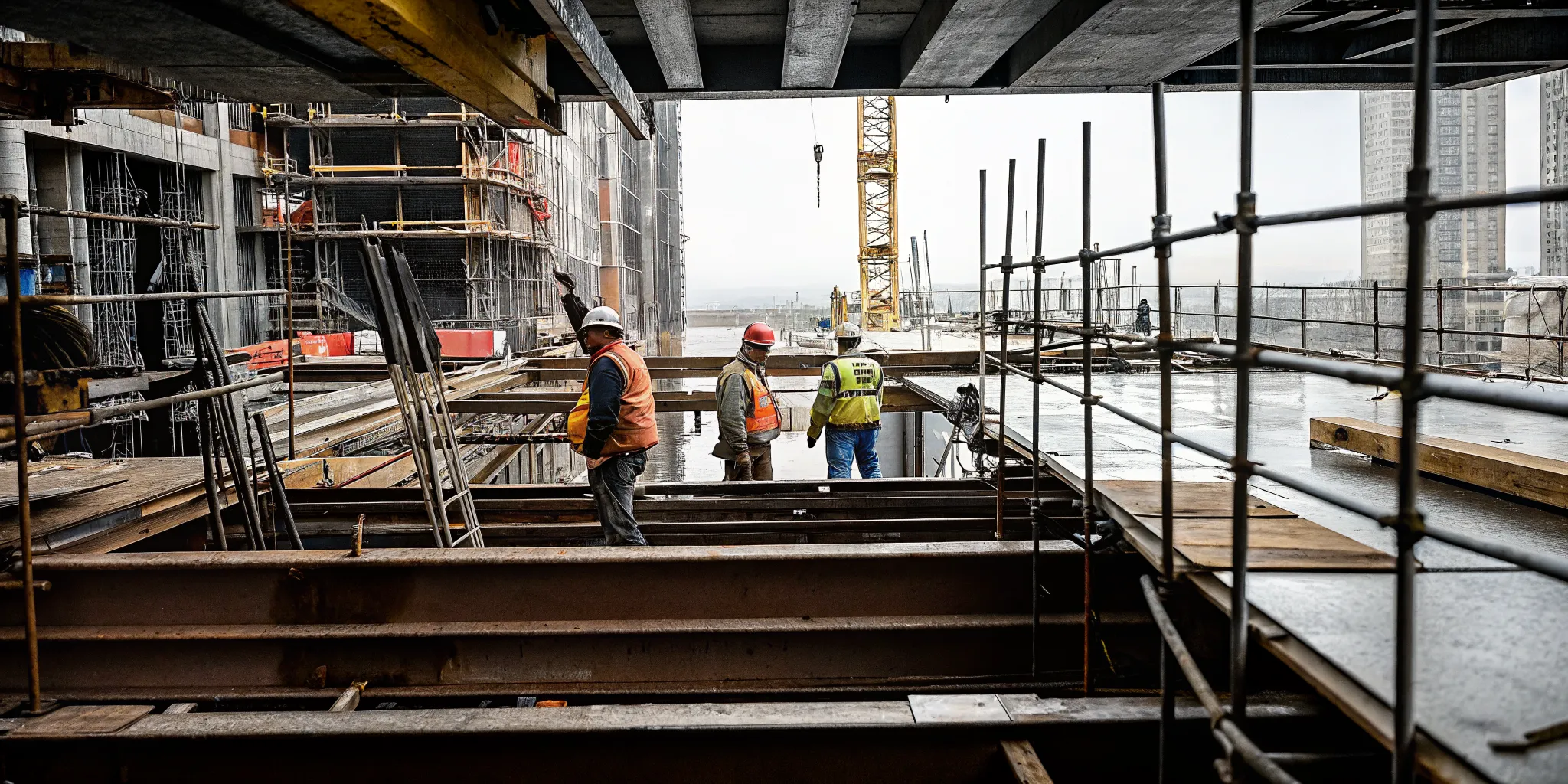
Builders must provide the DOB with a short notice 24 to 48 hours before they start digging. This rule applies to all underpinning inspection NYC work. The notice allows the city to schedule safety checks and track where deep excavation is occurring across the boroughs. If work must be canceled, the contractor must notify the DOB within 24 hours of the original start date.
Adjacent property rights and protections
Under Section 3309.5 of the city code, the party performing the work is financially responsible for protecting adjacent buildings. This protects neighboring properties from damage during excavation. However, you must first obtain a legal right to enter the adjacent lot. This process should begin early to prevent construction delays. If a neighbor refuses access, you may need a court order. AKS Architectural and Engineering Services LLP can guide you through these requirements to ensure your site remains in full compliance.
Inspection and filing procedures
Per DOB Bulletin 2010-001, a licensed engineer must verify that the work matches the approved plans. All excavated piers must receive concrete in a single continuous pour to maintain ground stability. All documentation must be filed through the DOB NOW system, including a TR1 form designating your Special Inspection Agency. You can order TR1 progress inspections online to expedite the process. The owner must select an agency before the DOB will issue a permit, and the agency director must be a full-time employee of that firm.
- Identify your code year:
Determine whether the 2008/2014 or 2022 NYC Building Code applies to your project permit date.
- Submit plans for full DOB review:
Underpinning plans require a complete city review rather than a professional seal alone.
- File the Earthwork Notice:
Notify the DOB 24 to 48 hours before excavation begins.
- Secure adjacent property access:
Obtain a legal license to enter neighboring lots per Section 3309.5.
- Register your Special Inspection Agency:
Appoint a licensed SIA and file the TR1 form through DOB NOW before your permit is issued.
What Does a Structural Stability Inspection Include During Underpinning?
Underpinning demands continuous on-site oversight to maintain structural safety. Under Section BC 1705.25.8.3, an underpinning inspection NYC must be continuous. An inspector remains on site for the duration of active work to monitor the building's structural stability in real time.
Inspection scope: The inspector monitors for signs of wall movement, soil settlement, or structural stress during all underpinning operations. Any detected risk triggers an immediate work stoppage until the engineer of record reviews and approves conditions.
Continuous monitoring for structural safety
The inspector looks for signs of movement or stress in walls, floors, and columns. They verify that soil conditions remain firm and stable. If a risk is detected, work stops immediately. This high level of vigilance prevents settlement or collapse and protects both the new construction and the existing structure.
Special inspectors from AKS Architectural and Engineering Services LLP use calibrated instruments to track structural movement. They document crack propagation, floor tilt, and load-bearing changes. This data enables the engineer of record to confirm that the underpinning design is performing as intended. Regular monitoring is the most effective way to prevent costly structural damage.
Filling and load transfer standards
Once a pier is excavated, it must be filled immediately to maintain ground stability. DOB Bulletin 2010-001 Section 4.4 requires piers to receive concrete in a continuous pour without interruption. This prevents soil relaxation around the excavation. A licensed engineer must verify pier depth before any concrete is placed, ensuring it matches the approved plans for your underpinning inspection NYC process.
Load transfer is the most critical phase of the operation. During this stage, the building's weight shifts from the existing footing to the new pier. The inspector verifies that the dry pack or grout achieves full contact. This step must be executed precisely to prevent post-construction settlement and to ensure the new piers can bear the full structural load for decades.
Protecting adjacent structures
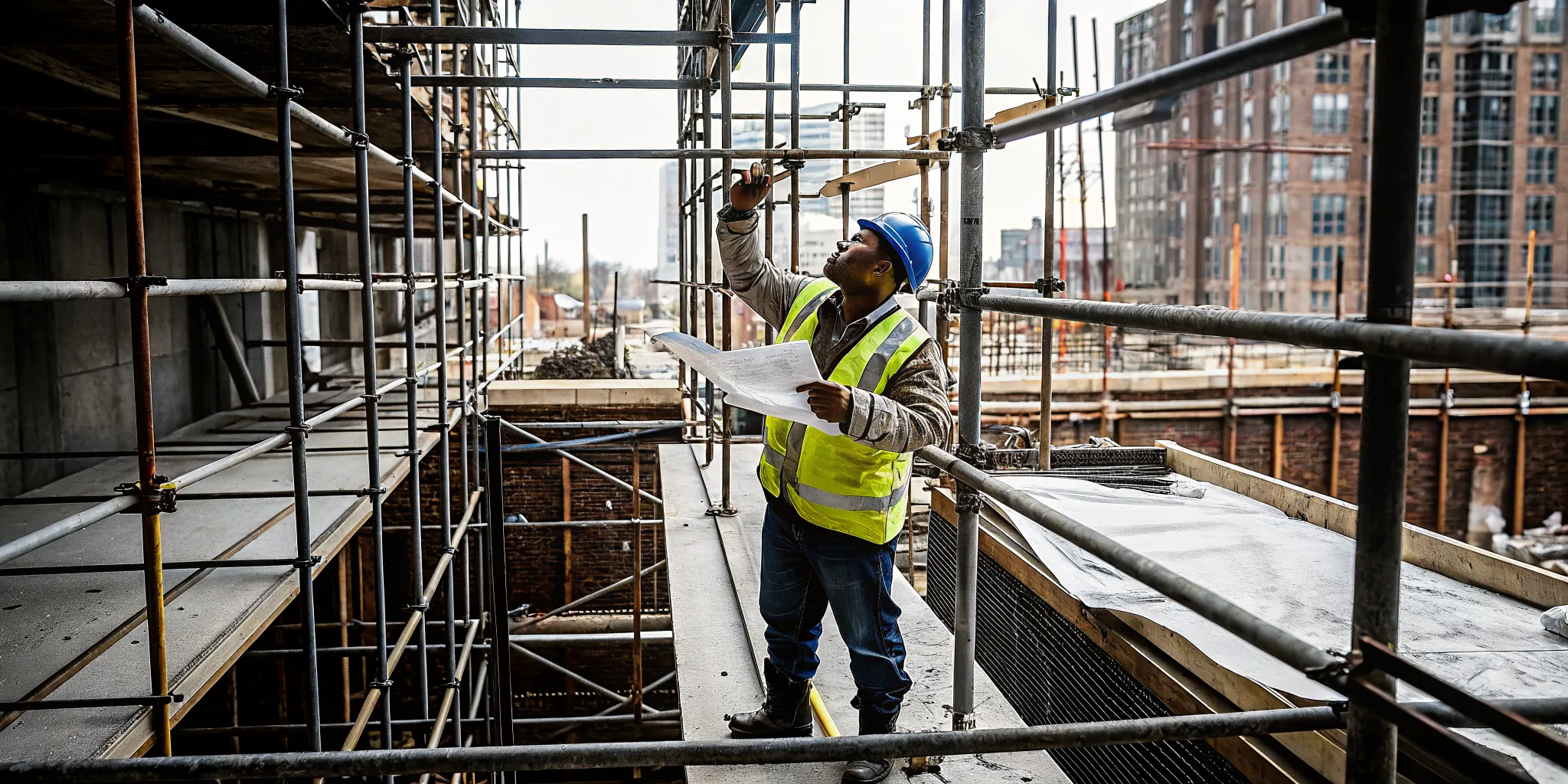
Underpinning frequently affects neighboring buildings. NYC law under BC 3309.5 requires active protection of those structures, which often involves an adjacent structures special inspection service to track any impact. Inspectors document cracks, shifts, or settlement in adjacent walls and maintain a detailed log to demonstrate that the site work remains safe.
Engaging a Registered Special Inspection Agency for Your Project
Before any underpinning work begins, the project owner must hire a registered Special Inspection Agency (SIA). The NYC Department of Buildings requires this step to maintain site safety. According to NYC regulations, the owner must select an SIA before the DOB issues a work permit. The agency assumes responsibility for all special and progress inspections, serving as an independent third party that verifies compliance with approved plans.
Rules for registered agencies
Every SIA operating in New York City must comply with the requirements of 1 RCNY Section 101-06. Each agency must employ a full-time director who holds a Professional Engineer (PE) or Registered Architect (RA) license. The director oversees all field inspections and ensures every inspector has appropriate qualifications for their assigned tasks. Agencies must also demonstrate independence from the contracting crew performing the work, eliminating conflicts of interest and ensuring objective evaluations.
Inspectors must meet specific qualification standards for each inspection type they perform. They require specialized expertise to evaluate complex operations such as foundation support or firestop systems. Most inspectors hold credentials that demonstrate their ability to identify structural risks. The agency must also carry at least $1 million in general liability insurance to protect the project, the owner, and the public.
What to look for in an NYC Special Inspection Agency
When selecting an agency, evaluate both their track record and their operational capabilities. A reliable partner will help you navigate the complex DOB filing requirements. Look for these specific attributes:
- Full-time PE or RA director:
The agency must have a licensed professional leading the team.
- Transparent, upfront pricing:
No hidden fees or surprise charges after work begins.
- Rapid scheduling capability:
The ability to dispatch an inspector within 48 hours.
- Digital filing through DOB NOW:
Experience with electronic submissions reduces processing delays.
- Local NYC code expertise:
Deep familiarity with borough-specific inspection protocols.
Agencies that leverage digital tools can save weeks of processing time. Fast filings mean your project advances to the next phase without waiting for paper forms. A competent agency also produces clear, DOB-ready reports that pass city review without revisions.
The AKS Architectural and Engineering Services advantage
AKS Architectural and Engineering Services LLP brings more than 40 years of experience across all five boroughs. Our operating brand, EZTR1, was built specifically for small to midsize projects, particularly those under 4,000 square feet that larger firms frequently overlook. We publish all pricing online so you know the cost upfront, eliminating the back-and-forth of quote requests. Our PEs and RAs are committed to keeping your project safe and compliant from mobilization through final sign-off.
Recent Regulatory Changes Affecting Underpinning Inspections
The regulatory landscape for underpinning inspections in NYC has shifted substantially in recent years. New York City has revised its building codes and filing systems to improve construction safety. These changes impose stricter requirements on owners and contractors. Working with an agency that tracks these developments is essential to avoid compliance gaps.
The move to private special inspections
In 2018, Buildings Bulletin 2018-08 shifted primary responsibility for technical inspections from the DOB to private Special Inspection Agencies. Private firms such as AKS Architectural and Engineering Services LLP now perform most of the technical evaluations that city inspectors previously handled. This change accelerates project timelines but places a greater burden on agencies to maintain meticulous records.
2022 NYC Construction Code updates
The 2022 NYC Construction Code introduced 13 new special inspection categories. Section BC 1705.25.4 now provides expanded rules for underpinning and alternate support methods for adjacent buildings. These rules strengthen protections for neighboring structures during deep excavation. Your inspection plan must account for every applicable new category based on your site's specific structural requirements.
Mandatory DOB NOW electronic filings
As of January 2024, all inspection filings must be submitted through the DOB NOW electronic portal. This requirement applies to every step of the inspection process. Digital-first agencies like EZTR1 hold a clear advantage because their workflows are already built around online systems. You can browse EZTR1.com's full service catalog online to identify the exact digital filing services your project requires.
Support of excavation rule changes
New support of excavation (SOE) rules taking effect in 2025 introduce additional requirements for shoring and framing during underpinning. These updates aim to prevent soil displacement that could compromise adjacent buildings. When planning your next project, review related services such as the adjacent structures special inspection service to ensure full compliance with the latest safety standards.
How to Choose the Right Inspection Partner for Small to Midsize Projects
Large inspection firms in New York typically prioritize major developments and high-rise towers. Companies such as SOCOTEC and Milrose generally focus on large-budget clients, leaving many small to midsize projects without the responsive service they need. This is particularly true for jobs under 4,000 square feet, which still require precise underpinning inspection NYC services to remain code-compliant.
Finding a firm that fits your project scale
Small projects operate on tight schedules and lean budgets. Waiting weeks for a quote from a large firm is rarely feasible. AKS Architectural and Engineering Services LLP focuses specifically on this underserved segment. We understand that a smaller building footprint does not reduce the complexity or risk of the work. Every project, regardless of size, requires a registered agency to perform the mandated inspections under NYC DOB rules.
Our team has over 40 years of local building experience across the city. This depth of expertise ensures we are current on the 2022 code updates and the latest DOB NOW procedures. We help you avoid unnecessary costs and delays by getting every inspection right the first time. You receive direct access to licensed experts who understand the nuances of city building regulations.
Reliable support from licensed professionals
A common challenge for builders is securing inspection partners with available capacity. At AKS, our inspection team is led by licensed professional engineers and registered architects who personally oversee every site visit. This commitment ensures that each inspection meets the highest safety standards. We do not dispatch administrative staff. We send qualified professionals who can identify and document issues early.
Having a licensed professional on your side extends beyond code compliance. It provides confidence that your project will pass the final city review without surprises. Our team cross-checks every element against the approved plans to identify gaps before they become problems. This thorough approach keeps your project moving forward without enforcement delays.
Transparent pricing and rapid mobilization
Hidden fees are a persistent frustration in the construction industry. We address this through EZTR1.com's full service catalog, which lists clear pricing for over 100 inspection types. You can purchase exactly what you need, such as a footing and foundation progress inspection, directly online. This eliminates the need for time-consuming phone calls and email negotiations.
Our service area covers:
- All five New York City boroughs:
Manhattan, Brooklyn, Queens, Bronx, and Staten Island
- Long Island:
Nassau and Suffolk counties
- New Jersey:
Select counties within reasonable dispatch range
We require only 48 hours notice to mobilize an inspector to your site. This rapid response keeps your crews productive and minimizes idle time. For urgent technical questions about your build, call (646) 396-1924.
Ready to secure your underpinning inspection NYC? Book online at EZTR1.com or call (646) 396-1924 to schedule your inspection within 48 hours.
Frequently Asked Questions
What is the difference between continuous and intermittent special inspection for underpinning?
Under the New York City Building Code, underpinning requires continuous special inspection for structural stability while work is active. Intermittent inspection is permitted only for certain items such as material testing. Continuous oversight means the inspector is present during all underpinning operations to monitor for movement or settlement of the existing structure.
How far in advance must I notify the DOB before starting underpinning work?
Contractors must notify the Department of Buildings at least 24 to 48 hours before beginning any earthwork or underpinning. If the scheduled work is canceled, the contractor must notify the DOB within 24 hours of the original start date. This requirement allows city inspectors to visit the site and verify compliance with approved safety plans.
Who can perform a special inspection for underpinning in NYC?
Only a registered Special Inspection Agency can perform these inspections. The agency must be registered with the city and hold the appropriate classification for the type of work. For underpinning, the inspector is typically a licensed Professional Engineer qualified to assess structural stability. You can book these services through AKS Architectural and Engineering Services LLP online at EZTR1.com.
What happens if underpinning is not inspected in NYC?
Performing underpinning without a special inspection can result in a Stop Work Order from the DOB. The Department of Buildings conducts random audits of construction sites to verify compliance. Working without the required permit or inspection can lead to substantial fines and extended project delays. Unsafe work may also cause damage to adjacent properties, resulting in legal liability.
What is BC 1705.25.4 in the 2022 NYC Construction Code?
The 2022 code update introduced Section BC 1705.25.4 to govern underpinning and alternate methods of support for buildings and adjacent property. This rule requires a special inspection for any new foundation elements installed during underpinning, treating them as permanent building components. It ensures that the support system is strong enough to protect both the existing and new structures during and after construction.
Book Your Underpinning Inspection NYC Today
A delayed or missed underpinning inspection can trigger stop-work orders, city fines, and weeks of idle crew time. These disruptions push your project timeline back and increase costs while you wait for new approvals. Acting now keeps your foundation work moving forward and ensures full compliance with NYC Building Code requirements. AKS Architectural and Engineering Services LLP provides fast, professional inspections for small to midsize projects, helping you avoid lengthy delays and enforcement actions. We also offer a footing and foundation progress inspection to cover every DOB requirement on your compliance checklist.
Call (646) 396-1924 or book online at EZTR1.com to schedule your underpinning inspection NYC today.


Comments