TR1 Private Stormwater Drainage Inspection NYC Guide

A TR1 private stormwater drainage inspection in NYC helps the project team document whether a private drainage, disposal, or detention system was installed in accordance with the approved construction documents and applicable requirements. It is most useful when the owner, registered design professional, contractor, and special inspection agency agree on the inspection category and timing before the work is covered.
What is a TR1 private stormwater drainage inspection?
Key takeaway: A TR1 private stormwater drainage inspection is a project-specific compliance review for private on-site stormwater drainage, disposal, or detention work. The inspection agency compares observable installation work and required testing with the approved plans and records the result for the project team to use in the DOB filing and sign-off process.
The category can apply to more than one type of system. Depending on the approved design, a project may include a drywell, roof retention or detention facility, private drainage arrangement, flow-control device, or related site work. The exact scope is not determined by the word "stormwater" alone. The construction documents and filing identify what the project is supposed to build.
NYC Department of Buildings materials identify private on-site stormwater drainage disposal systems and detention facilities within the special inspection framework. The official TR1 Technical Report Statement of Responsibility lists the private on-site stormwater category and the associated Building Code references. The current NYC Building Code Chapter 17 special inspection text explains the broader roles of the registered design professional, owner, permit holder, and special inspection agency.
For EZTR1 customers, the inspection is not a substitute for engineering design, drainage calculations, or a sewer approval. It is the field verification and reporting service that supports the design and filing team when this inspection category is required for the project.
When might a private stormwater inspection apply?
Key takeaway: A private stormwater inspection may apply when permitted work includes a private on-site drainage, disposal, or detention facility identified in the construction documents or DOB filing. The registered design professional should confirm the applicable code edition, inspection category, and testing sequence before construction begins.
Common project situations include a small new building, an addition, a site alteration, or a renovation where stormwater cannot be handled solely through an existing arrangement. A project may also involve an underground detention chamber, drywell, roof retention system, or another approved method of managing runoff. A system that looks similar to one on another job can still have different requirements because soil conditions, site layout, discharge arrangements, and approved plans vary.
Do not assume that every site drainage improvement requires the same TR1 treatment. NYC DOB's plumbing guidance states that the registered design professional must submit plumbing plans and work permit applications through DOB NOW: Build. The filing may include former TR1 special inspection information, and substantial changes to approved scope may require a Post Approval Amendment before the work or equipment is completed.
- Approved design:
The plans identify the drainage or detention system, materials, dimensions, locations, and related work that the inspector will compare against the installation.
- Site conditions:
Soil, groundwater, existing utilities, available grades, and the relationship to surrounding structures may affect the design and inspection sequence.
- Filing scope:
The DOB NOW application and construction documents should identify required inspection responsibilities instead of leaving the category to be settled after installation.
- Construction stage:
Some observations or tests must occur before pipe, bedding, fill, or other work is concealed, while later work may be reviewed at a separate stage.
What does the inspection cover?
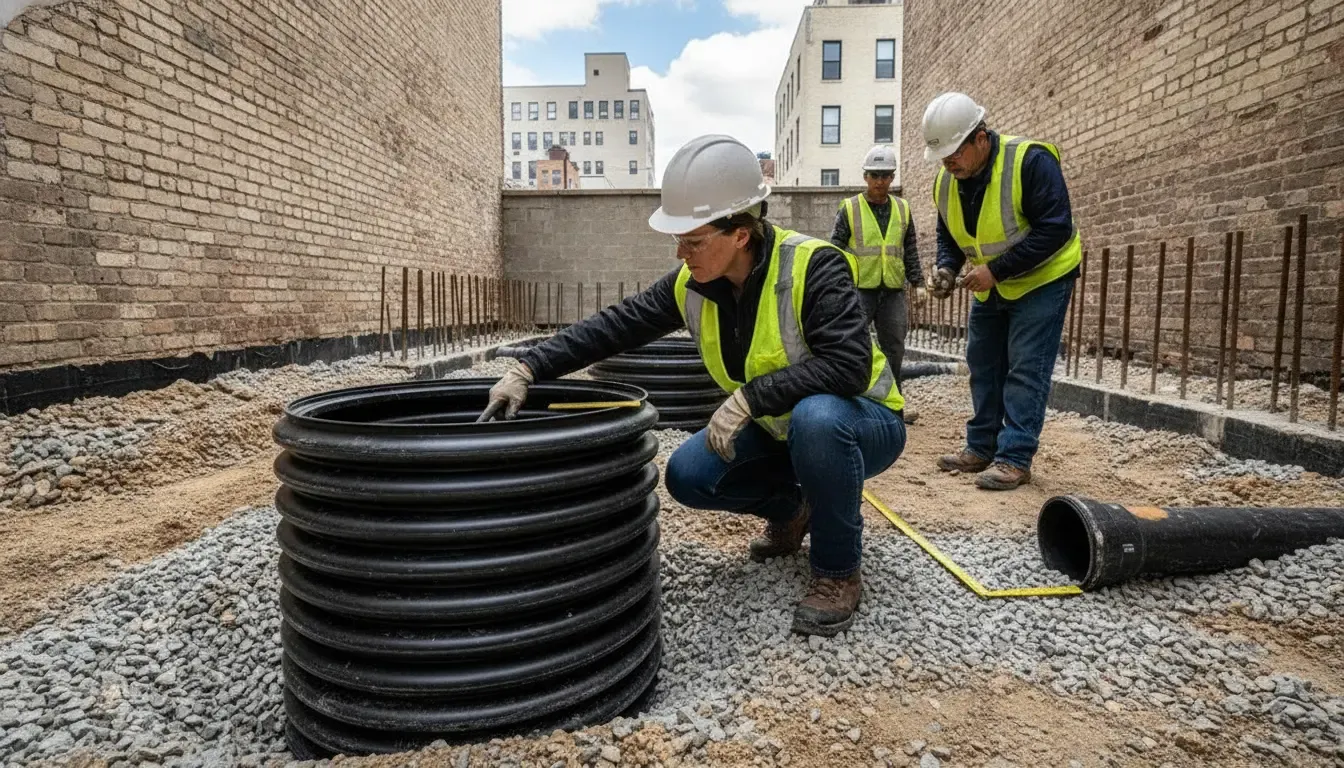
Key takeaway: The inspection generally focuses on whether the installed private stormwater system matches the approved construction documents and whether required observations or tests were completed at the right stage. Scope may include materials, bedding, fill, facility volume, flow-control components, workmanship, and overall conformance, subject to the approved design and applicable DOB requirements.
The inspection agency needs enough access to observe the work that is subject to inspection. Depending on the system, the review may address:
- Materials:
Pipe, chambers, structures, aggregate, liners, fittings, and other specified components.
- Installation:
Pipe alignment, connections, bedding, cover, placement, and the construction of the facility shown in the plans.
- Fill and support:
The placement of approved fill or stone and the preparation of the surrounding soil or base.
- Capacity:
The volume of a drywell or detention facility and the relationship between the installed volume and the approved design.
- Flow control:
Orifices, control devices, outlets, overflow arrangements, and other components shown in the approved documents.
- Testing:
Soil percolation or other required testing when identified by the design, code, or filing. A watertight detention design may also require hydrostatic testing.
- Conformance:
Overall comparison with approved construction documents, including documented field changes and accepted variations.
A field inspector does not redesign the system during the visit. If the installed work differs from the approved documents, the project team should involve the registered design professional of record. The design professional decides whether a clarification, revised detail, corrected installation, or formal filing action is needed.
How do DOB NOW and TR1 records fit together?
Key takeaway: DOB NOW, the construction documents, and the TR1 responsibility record should tell the same story. The filing team identifies the applicable inspection category, assigns responsibilities, coordinates the inspection agency, and preserves the final documentation needed for project closeout.
NYC DOB's plumbing project requirements explain that plumbing applications are submitted through DOB NOW: Build and may include the special inspections section formerly associated with TR1 forms. The DOB's Progress and Special Inspections technical reports reference also distinguishes mandatory inspections, conditional inspections, and other inspections that may be required by law or rule but are not automatically populated.
That distinction matters for private stormwater systems. The absence of an automatically populated inspection does not, by itself, prove that no inspection is required. The registered design professional must review the work type, approved plans, applicable code, and project filing. If a required category is missing or incorrectly described, correct the filing before relying on an inspection report for sign-off.
Project record | What it should clarify | Who typically coordinates it |
Construction documents | System design, locations, materials, capacity, and installation details | Registered design professional of record |
DOB NOW filing | Application scope, inspection selections, responsibilities, and amendments | Applicant of record and owner |
TR1 responsibility record | Inspection agency role, category, and sign-on or sign-off responsibilities | Filing team and inspection agency |
Field inspection records | Observed work, test results, discrepancies, and completion status | Special inspection agency |
How should the project team prepare?
Key takeaway: Preparation is mostly document and timing coordination. Before requesting a TR1 private stormwater drainage inspection, the team should assemble the approved plans, confirm the inspection stage, identify the person responsible for site access, and ensure that the work is visible and ready for review.
- Confirm the category:
Ask the registered design professional to confirm whether the project includes private stormwater drainage disposal or detention work and which code edition applies.
- Assemble the plans:
Have the approved construction documents, relevant plumbing or civil details, approved amendments, and equipment or material information available.
- Check the sequence:
Identify any soil testing, percolation testing, bedding observation, installation observation, or final review that must occur before the next construction step.
- Coordinate access:
Provide the job address, contact person, DOB or BIS job information when requested, safe access, and a work area that is ready for observation.
- Keep changes visible:
If field conditions require a change, involve the design professional before covering the work. Do not ask an inspector to approve an unrecorded design change in the field.
- Track closeout:
Retain inspection reports, test results, correction records, and final sign-off information with the project file.
For small and mid-size projects, early coordination can prevent a common problem: the drainage system is installed and covered before anyone confirms whether an inspection or test was required at that stage. A short pre-installation discussion between the design professional, contractor, and inspection agency is often more useful than trying to reconstruct concealed work later.
What is the difference between a DOB inspection and a DEP sewer approval?
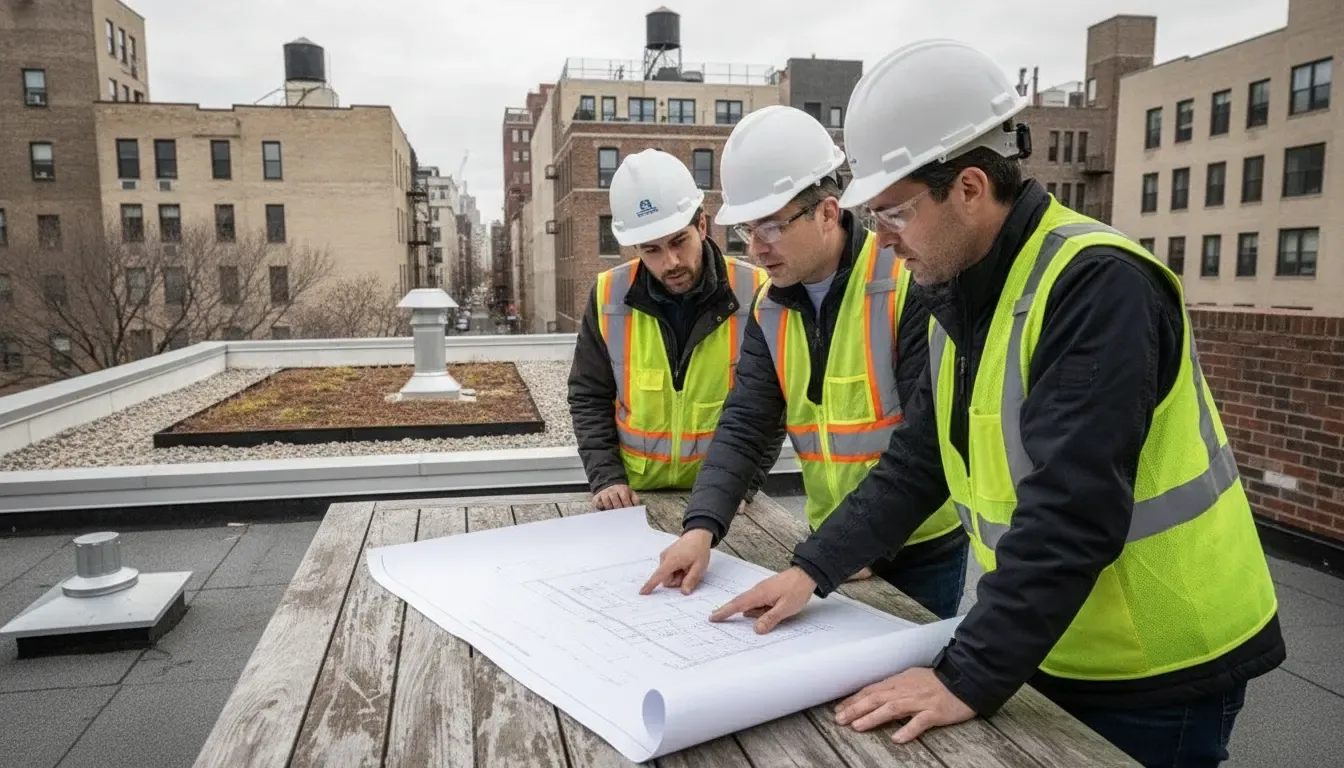
Key takeaway: A DOB special inspection and a DEP sewer certification or connection approval address different responsibilities. The DOB inspection verifies construction-related compliance for the identified inspection category, while DEP reviews sewer connection and discharge matters when the project requires them.
NYC DEP states that a sewer certification may be required for a new connection to a city sewer, private sewer, private drain, septic system, or approved outlet. DEP also notes that certification may be needed for an alteration or renovation that increases sanitary or storm flow. These are separate project questions from whether a special inspection agency must observe private stormwater work.
The NYC DEP sewer connections guidance says sewer certifications are prepared by a New York State licensed Professional Engineer or Registered Architect on behalf of the owner or developer, and that a subsequent sewer connection permit authorizes connection work. The project team should therefore coordinate the DOB and DEP paths rather than treating an inspection report as a sewer approval.
EZTR1 can provide the matching private stormwater inspection service when the project team has confirmed the applicable scope. Questions about system design, discharge capacity, sewer acceptance, or engineering certification should be directed to the project's registered design professional and the relevant city agency.
How can a project team order the matching EZTR1 service?
Key takeaway: Start with the approved project information, then use EZTR1's matching TR-1 private on-site stormwater drainage, disposal, and detention service page to review the service scope and online checkout path. If the project does not fit the listed service, use the site's contact route before ordering.
EZTR1 is the operating brand of AKS Architectural and Engineering Services LLP, a Class 2 NYC Special Inspection Agency focused on small and mid-size projects. The site is designed to make inspection selection and payment more direct than a traditional quote-only process.
Before ordering, have the project address, DOB or BIS job information, approved plans, expected inspection stage, and design-professional contact details available. The service page identifies the inspection as a sign-on, inspect, and sign-off package. The agency still needs the project-specific information needed to coordinate the visit and confirm that the selected service matches the approved work.
Frequently asked questions
Is a TR1 private stormwater drainage inspection required for every NYC project? No. The requirement depends on the project scope, applicable code, approved construction documents, and DOB filing. The registered design professional of record should identify required inspections before construction documents are approved.
What systems may be included in this inspection category? The category may involve private on-site stormwater drainage, disposal, or detention facilities, such as drywells, detention chambers, roof retention systems, and related flow-control work. The approved design determines the actual scope.
Does the inspector approve a stormwater system design? No. The inspector observes and documents work within the assigned inspection scope. The registered design professional remains responsible for design decisions, approved documents, and decisions about field changes.
Can a stormwater inspection replace DEP sewer certification? No. DOB inspection and DEP sewer certification or connection approval serve different purposes. A project may need one or both, depending on its discharge arrangement and work scope.
What should be ready before the inspection? The team should have approved plans, relevant DOB or BIS information, safe site access, visible work, required test records, and a contact who can explain the installation. Any proposed deviation should be reviewed by the design professional before work is covered.
Where can I find the matching service? The EZTR1 private on-site stormwater drainage, disposal, and detention service page provides the matching service information and online checkout path.


Comments