TR1 Concrete Cast-in-Place Inspection in NYC Guide

Updated: 6 days ago
A TR1 concrete cast-in-place inspection in NYC helps document whether concrete work is being performed in accordance with the approved construction documents and applicable code requirements. For a small restaurant fit-out, brownstone renovation, addition, or other permitted project, the inspection needs to be planned before reinforcement and embedded items are concealed, not requested after the pour is complete.
Order or review the NYC TR1 concrete cast-in-place inspection service through EZTR1.com's online inspection catalog.
What is a TR1 cast-in-place concrete inspection in NYC?
A cast-in-place concrete inspection is a field inspection of concrete work formed and poured at the project site. The inspector observes the work that the filing and approved documents identify for special inspection, records conditions at the relevant stage, and reports whether the observed work conforms or needs correction. It is a compliance inspection, not a substitute for structural design or contractor quality control.
Older NYC TR1 forms and service catalogs commonly identify the category as Concrete - Cast-In-Place, BC 1704.4. In the current 2022 NYC Construction Code, concrete special inspections are organized under BC 1705.3 and Table 1705.3. Code editions, amendments, project scope, permitted exceptions, and the design professional's filing determine what applies to a particular job. Owners and contractors should confirm the current requirement with the registered design professional and NYC Department of Buildings guidance.
For EZTR1 customers, the practical purpose is straightforward: bring the special inspection agency into the concrete sequence early enough to observe required work, identify documentation gaps while they can still be corrected, and support the technical report and closeout process.
Summary: A TR1 cast-in-place inspection documents field conditions for concrete work that requires special inspection. The applicable label may reference BC 1704.4 on older forms, while current 2022 code requirements are organized under BC 1705.3 and Table 1705.3.
When should the inspection be scheduled?
Schedule the inspection during project planning, before the concrete crew reaches the inspection milestone. The exact sequence depends on the approved plans, the permit, the required inspection items, and whether the work is continuous or periodic. The agency needs enough notice to coordinate access with the owner, general contractor, concrete crew, and design team.
- Before concealment:
Arrange the visit while reinforcement, anchors, sleeves, embeds, and other required components remain visible.
- Before the pour:
Coordinate the inspection before concrete placement when the approved documents or code require pre-placement observation.
- During placement:
Keep the inspector's role clear when the required scope includes placement techniques, consolidation, pumping, or other work that must be observed as it occurs.
- At corrections:
Share revised details and request a follow-up observation when an issue affects the inspected work or the record of completion.
- Before closeout:
Confirm that field records, certifications, and related technical reports are complete before the project approaches sign-off.
Do not treat the inspection as a final walk-through after the concrete has covered the work. If the inspector cannot see the reinforcement or embedded items, the project team may need additional documentation, exposure, or direction from the design professional before the record can be completed.
For a small or mid-size project, the best scheduling conversation starts with the project address, permit or job information, concrete placement date, work location, drawings available to the field team, and the inspection items shown on the filing. EZTR1's menu-based online ordering helps owners, architects, engineers, and contractors identify the service and begin coordination without waiting for a traditional quote response.
Summary: Schedule a cast-in-place inspection before required work is covered and early enough for the agency to coordinate the concrete milestone. The project team should provide the permit and drawing context, planned pour timing, location, and any correction or follow-up needs.
What does the inspector review before and during a concrete pour?
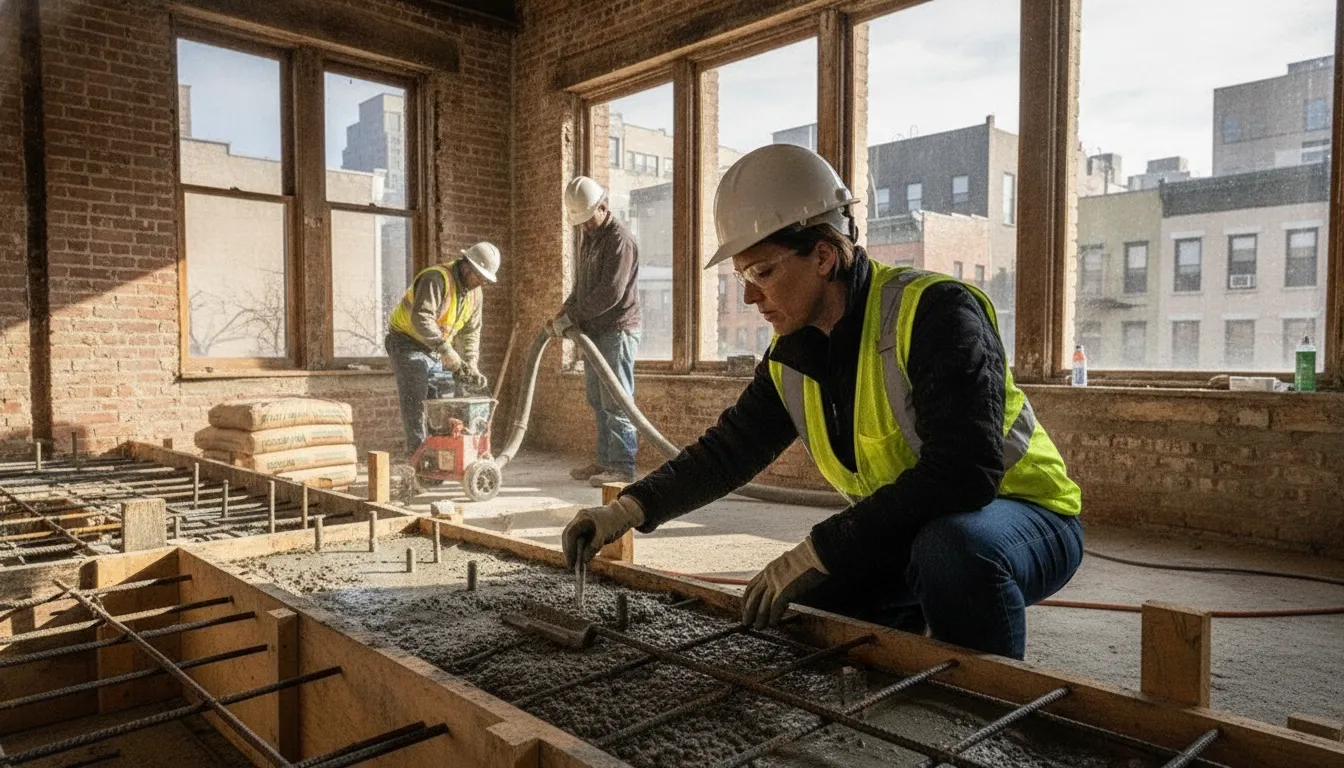
The inspection scope is filing-specific, but the current NYC concrete provisions describe several recurring areas of attention. The inspector works from the approved construction documents and the responsibilities accepted by the special inspection agency. A field review may include the following:
- Reinforcement:
Verify the visible placement, size, spacing, support, laps, and other details identified by the approved documents.
- Cast-in anchors:
Observe anchors and related hardware that will be embedded in the concrete, including their location and installation conditions.
- Post-installed anchors:
Where applicable, confirm that the required inspection of anchors installed in hardened concrete is addressed under the approved scope.
- Forms and embeds:
Review formwork, sleeves, openings, penetrations, and embedded components that affect the concrete assembly and cannot be checked after placement.
- Placement methods:
Observe concrete or shotcrete placement techniques when those methods fall within the required inspection scope, including conditions associated with pumping and consolidation.
- Construction documents:
Compare the work in the field with the drawings, specifications, approved revisions, and details supplied for the inspection.
The inspector is not the contractor's superintendent and does not redesign the structure in the field. If the observed work differs from the approved documents, the responsible design professional and contractor must determine the correction. The agency records what it observed and the status of the issue rather than approving an undocumented design change.
Concrete sampling and fresh-concrete testing can occur in the same construction sequence, but that work belongs to the licensed concrete testing laboratory and the applicable TR2 process. The project should assign each responsibility clearly so that a field inspection is not mistaken for a cylinder test.
Summary: The cast-in-place inspector focuses on visible construction conditions such as reinforcement, anchors, forms, embeds, placement methods, and conformance with approved documents. The precise checklist comes from the filing and code requirements, while concrete sampling and strength testing remain a separate laboratory responsibility.
How does TR1 differ from TR2 concrete testing and TR3?
TR1, TR2, and TR3 can appear together on a concrete project, but they document different responsibilities. The NYC Department of Buildings states that the TR2 identifies the licensed concrete testing laboratory responsible for sampling and testing, while the TR3 identifies the concrete design mixes to be used. The cast-in-place special inspection addresses field observation of the construction work identified for inspection.
Report or service | Primary job | Typical project question |
TR1 cast-in-place inspection | Documents special inspection responsibility and field observations for required cast-in-place concrete work. | Was the required concrete construction observed and recorded at the appropriate stage? |
TR2 concrete testing | Identifies the licensed laboratory for concrete sampling, test cylinders, and compression testing. | Were samples collected and tested through the required laboratory process? |
TR3 concrete design mix | Identifies the concrete mixes and supporting mix documentation before permit issuance. | Is the proposed concrete mix documented for the project? |
One project may need all three functions. A TR2 test result does not prove that reinforcement, forms, anchors, or placement conditions were inspected. Similarly, a TR1 field observation does not replace the laboratory's sampling, cylinder, or compression-testing records. Keeping the roles distinct prevents an owner or contractor from assuming that one report covers every concrete obligation.
EZTR1's existing TR2 concrete report guide and TR3 concrete design mix service page provide related information. The TR1 progress inspection guide offers broader context, while this article focuses on cast-in-place concrete field inspection.
Summary: TR1 field inspection, TR2 concrete sampling and strength testing, and TR3 mix documentation are complementary but separate. A project can require all three, and completing one does not replace the responsibilities recorded in the other reports.
What records support completion and closeout?
A useful inspection record lets another project participant understand what was inspected, where and when it was inspected, which documents governed the review, and how any discrepancy was addressed. The exact submission path depends on the filing and current DOB procedures, but owners and contractors should keep the project record organized from the first visit.
- Project identification:
Keep the address, job or permit information, work location, and inspection category together.
- Approved documents:
Provide the relevant drawings, specifications, revisions, and details used to compare the field condition.
- Visit details:
Record the inspection date, concrete milestone, areas observed, responsible parties present, and the conditions visible at the time.
- Photo documentation:
Where appropriate, retain photographs that show reinforcement, anchors, forms, embeds, or other inspected work before concealment.
- Corrections:
Track observed discrepancies, responsible-party responses, revised details, and follow-up observations without treating an unresolved item as complete.
- Related reports:
Keep the TR2 laboratory documentation and TR3 mix documentation separate but cross-referenced with the project file.
The agency's report should not be used to certify work that was not available to inspect. If a pour happens before the required inspection, stop and ask the registered design professional and the special inspection agency how the condition should be documented and resolved. Do not create a backdated inspection record.
Summary: Closeout records should connect the project, approved documents, inspection visit, observed work, photographs, corrections, and related TR2 or TR3 reports. Clear records reduce uncertainty for owners, contractors, architects, engineers, and the DOB review process.
How can a small NYC project avoid preventable delays?
Concrete work moves quickly, especially on a restaurant fit-out, brownstone renovation, small addition, or commercial alteration. A short coordination checklist can prevent the most common scheduling problems:
- Confirm the filing:
Ask the design professional which concrete inspection and testing responsibilities are listed for the project.
- Share the documents:
Make the current approved drawings and revisions available before the inspection visit.
- Coordinate the pour:
Give the agency the planned date, time, address, access instructions, and concrete placement location.
- Keep work visible:
Do not close forms or cover reinforcement before required observations are complete.
- Separate responsibilities:
Coordinate the special inspection agency and licensed testing laboratory so TR1, TR2, and TR3 tasks are not confused.
- Resolve changes promptly:
Route field changes through the responsible design professional instead of asking the inspector to redesign the work.
AKS Architectural and Engineering Services LLP, operating through the EZTR1 assumed name, focuses on small and mid-size NYC projects and offers a straightforward online inspection catalog. Owners and construction teams can review menu pricing, select the needed inspection, and use the online checkout path. The exact service, scope, and timing still need to match the project's approved filing and current NYC requirements.
For projects that need a different concrete service, EZTR1 also provides a dedicated TR2 concrete test cylinder page. Always select the service that matches the responsibility shown on the project documents.
Summary: Early coordination, visible work, current drawings, and clearly separated TR1, TR2, and TR3 responsibilities help small NYC projects avoid preventable delays. EZTR1 provides menu-based online ordering, while the project team remains responsible for confirming the filing-specific requirements.
Frequently asked questions
Summary: The answers below address the most common planning questions about NYC cast-in-place concrete inspections. Because requirements depend on the permit, code edition, and approved documents, the project team should confirm final responsibilities with the registered design professional and NYC DOB.
Is a TR1 concrete cast-in-place inspection the same as a TR2?
No. The TR1 cast-in-place inspection concerns special inspection of required concrete construction in the field. TR2 identifies the licensed concrete testing laboratory and covers sampling, test cylinders, and compression testing. The two functions may occur during the same pour but are not interchangeable.
Does every concrete pour require the same inspection?
No. The required scope depends on the permit, project type, code requirements, approved construction documents, and any applicable exceptions. The design professional identifies required responsibilities, and the special inspection agency confirms the scope it accepts.
When should reinforcement be inspected?
Coordinate the inspection while reinforcement, anchors, embeds, and other relevant work are visible, before concrete placement covers them. The project team should provide enough notice for the agency to access the work and review the applicable documents.
Can the inspector approve a field change?
No. The inspector can document an observed condition, but the responsible design professional must evaluate and approve a design or construction change when one is needed. The agency should not be asked to replace the design professional's role.
Can a small project order this service online?
Yes. EZTR1.com is designed for small and mid-size NYC construction projects and provides a menu-based online catalog. Choose the service that matches the project documents, then coordinate the inspection timing and access details with the agency.
Regulatory note: NYC requirements can change through code updates, local laws, rules, and Buildings Department guidance. For current concrete testing information, review the NYC Department of Buildings concrete testing requirements and consult the project's registered design professional.


Comments