TR3 Concrete Design Mix Approval NYC: Guide

If your New York City project will use concrete, TR3 concrete design mix approval in NYC belongs on the pre-permit checklist. The NYC Department of Buildings requires a Concrete Design Mix Technical Report before permit issuance, and the report must identify the mixes planned for the job. Preparing the project information, laboratory data, signatures, and DOB NOW responsibilities early can help a small project avoid a preventable filing delay.
Need help coordinating a TR3 service for a small or mid-size NYC project? Review the EZTR1 TR-3 Concrete Design Mix service.
Quick answer: A TR3 is the NYC DOB technical report for the concrete design mixes that will be used on a project. It is filed before the permit, includes mix strength and proportioning information, and requires supporting trial-mixture or field-experience documentation. The licensed concrete testing laboratory, design applicant, owner, and concrete producer each have defined responsibilities, so the TR3 should be coordinated as a team document rather than treated as a simple form.
What is a TR3 concrete design mix report?
A TR3 identifies the concrete design mixes proposed for a NYC job. The report records the location, licensed concrete testing laboratory information, design strength requirements, proportioning method, material data, and related performance characteristics for each mix. NYC DOB's concrete testing requirements page states that the TR3 must be filed before permit issuance on jobs where concrete will be used.
The TR3 is about the planned mix design. It is not the same document as the TR2, which addresses concrete sampling, testing, and compression test cylinders. A project can need both reports, and the team should confirm the complete filing sequence with the applicant of record and the licensed testing laboratory.
The report also creates an accountability record. The NYC DOB form and instructions identify statements or signatures for the licensed laboratory, concrete producer, design applicant, and building owner. Each party confirms a different part of the project information, so a missing signature or incomplete attachment can stop the report from being ready for submission.
Takeaway: TR3 documents the concrete mix designs planned for the project before the permit. It should be coordinated with, but not confused with, the separate TR2 concrete testing report.
When does NYC require TR3 approval?
NYC DOB states that a TR3 is required before permit issuance for jobs in which concrete will be used. The report identifies the mixes that will be used at the site, and the licensed concrete testing laboratory must submit the TR3 with the required trial mixture reports or field-experience results attached.
That timing makes TR3 planning an early design and filing task. Waiting until concrete delivery is scheduled can create a mismatch between the approved construction documents, the information available from the producer, and the data the laboratory needs to complete the report.
Additional TR3 reports may be needed when a project uses more than the number of mixes that can be recorded on one form or when additional trial mixes must be documented. The project team should use the current form and DOB instructions, rather than relying on an old copy stored in a project folder.
NYC's concrete requirements page also explains that the TR3 is part of a broader concrete compliance process. The TR2 identifies the laboratory responsible for sampling and testing, while the TR3 identifies the concrete mix designs. Project teams should confirm both reports and their submission timing before permit issuance.
Takeaway: Treat TR3 as a pre-permit deliverable. Identify every intended concrete mix early and ask the licensed laboratory and applicant of record what must be submitted for the specific job.
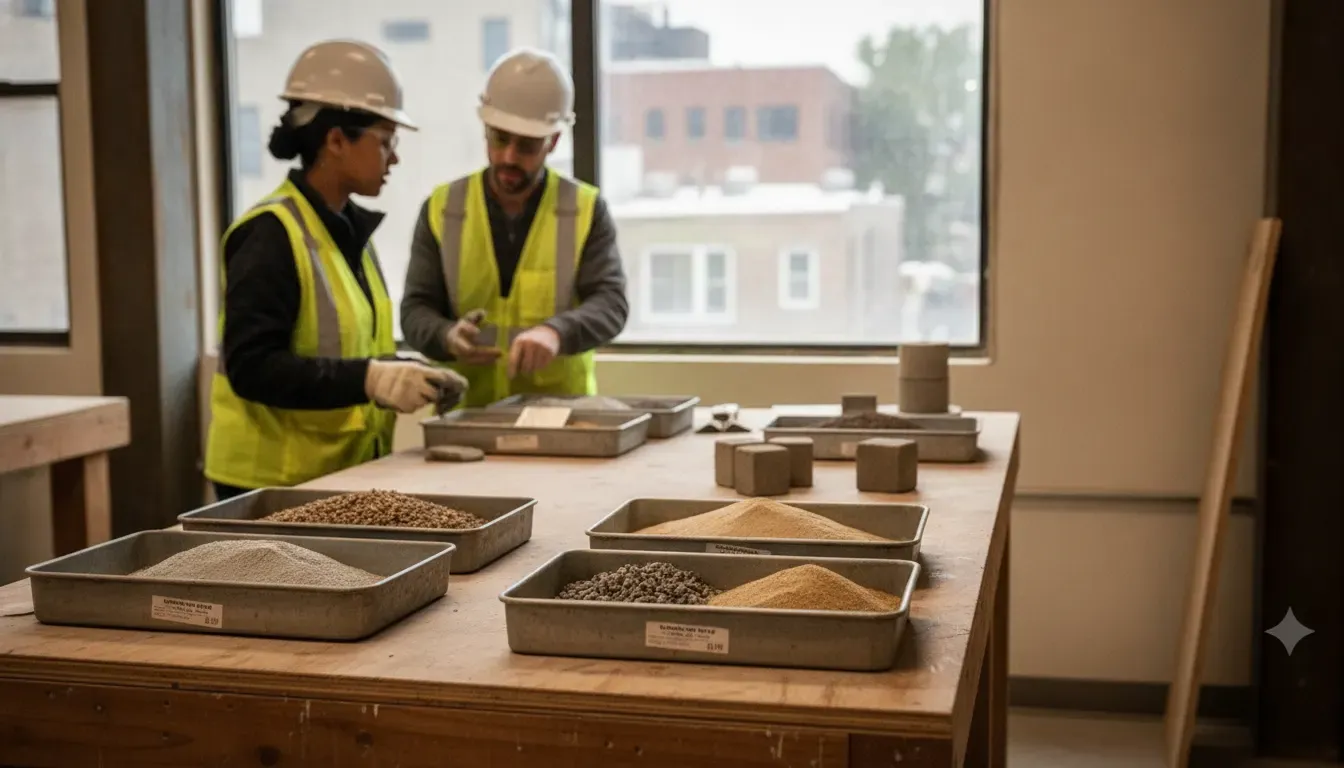
Early coordination helps the project team assemble mix information before the permit filing.
Who is responsible for the TR3?
TR3 responsibility is shared. The licensed concrete testing laboratory prepares and submits the technical report, but other project participants provide information and certifications. The exact workflow may vary by filing and should be confirmed in DOB NOW: Build with the applicant of record and the laboratory.
- Licensed concrete testing laboratory:
Completes the laboratory information and mix data, attaches the required trial-mixture or field-experience documentation, and submits the TR3 through the required process.
- Design applicant:
Confirms that the proposed mix designs comply with the approved construction documents and provides the required statement, signature, and seal when applicable.
- Building owner:
Provides the required owner statement and signature for the filing.
- Concrete producer:
Provides the producer statement and signature required for the concrete mix information.
- Applicant of record or filing representative:
Coordinates the filing sequence, project identifiers, stakeholders, and status in DOB NOW: Build.
This division of responsibility matters because a special inspection agency or compliance consultant cannot replace every role on the project. The design professional remains responsible for design approval, and the licensed laboratory remains responsible for the laboratory report and submission duties assigned by NYC DOB.
Takeaway: The TR3 is a coordinated filing, not a one-person approval. Confirm who supplies, signs, seals, and submits each part before the permit package is ready.
What information should the project team prepare?
Before the laboratory begins the TR3, gather the project identifiers and mix information that the form requests. The goal is to give each responsible party a consistent project record instead of sending partial information through several email threads.
Project and location information
- Project location:
Prepare the borough, block, lot, BIN, community board, house number, and street name requested by the form.
- Filing identifier:
Keep the DOB job information available. EZTR1's TR-3 service page asks customers to provide a BIS job number or project address when ordering.
- Approved documents:
Confirm the concrete scope and design requirements shown in the approved construction documents.
Laboratory and mix information
- Laboratory details:
Confirm the testing laboratory business information, license information, director information, and contact details.
- Strength requirements:
Prepare the specified concrete strength, required strength, and specified test age for each mix.
- Proportioning method:
Identify whether the mix proportions are based on trial mixtures, field experience, or the method required for the project.
- Material data:
Gather material types, sources, applicable ASTM standards, quantities, water-cement ratio, slump, air content, and unit weight as required by the form.
- Supporting records:
Attach the original trial-mixture reports or field-experience results required by NYC DOB.
The official TR3 instructions explain the form fields and signature sections in more detail. Use those instructions with the current DOB NOW workflow, because project requirements and online filing steps can change.
Takeaway: The fastest TR3 filing is built from a complete project record. Gather location data, approved design requirements, laboratory credentials, mix properties, supporting reports, and signature contacts before submission.
How does TR3 work in DOB NOW?
DOB NOW: Build organizes technical-report responsibilities around the job filing and its stakeholders. NYC DOB's TR2 and TR3 step-by-step guide describes the structural concrete workflow and the repeated handoffs among the applicant of record, owner, concrete producer, and licensed testing laboratory.
For a practical workflow, the project team can use the following sequence:
- Confirm the concrete scope:
Verify that the job filing and approved documents identify concrete work requiring the technical report.
- Assign the laboratory:
Confirm the Department-licensed concrete testing laboratory and its director information before data entry begins.
- Collect mix data:
Match each mix number to the required strengths, materials, proportions, and supporting trial-mixture or field-experience records.
- Coordinate stakeholder actions:
Give the design applicant, owner, and concrete producer a clear list of their statements, signatures, and deadlines.
- Review before submission:
Check that project identifiers, mix data, attachments, and signatures agree with the approved construction documents.
- Track status:
Keep a copy of the submitted report and monitor the technical-report workflow in DOB NOW with the filing team.
Small projects often have fewer staff members managing several filing duties at once. A short responsibility matrix can prevent the common mistake of assuming that the person ordering concrete, the design applicant, the producer, and the laboratory all have the same role.
Mid-project planning matters. Review the related TR2 concrete testing service when your project team is coordinating the full concrete reporting sequence.
Takeaway: DOB NOW does not remove the need for coordination. It gives the team a structured workflow, while the project participants still need to provide accurate data and complete their assigned actions.
What can delay TR3 concrete design mix approval?
Most avoidable delays begin before the report reaches the filing screen. A project team can reduce rework by reviewing the following issues during pre-permit coordination.
- Late laboratory selection:
The lab cannot complete its sections until the project confirms the responsible licensed concrete testing laboratory and director information.
- Incomplete mix documentation:
Missing trial-mixture reports, field-experience results, strength values, or material information can leave the report incomplete.
- Conflicting project identifiers:
A mismatch among the address, BIN, block and lot, job number, or approved documents can create questions during review.
- Unclear design responsibility:
The design applicant must be able to confirm that the mix designs correspond to the approved construction documents.
- Missing stakeholder signatures:
Owner, producer, laboratory, or design-applicant actions may remain incomplete if no one owns the deadline.
- Using an outdated form or process:
Always compare stored templates with the current NYC DOB form, instructions, and DOB NOW guidance.
- Mix changes after submission:
Adding a mix or changing the planned mix may require additional documentation or another TR3 submission. Ask the filing team before construction proceeds.
Keep a simple checklist showing the responsible person, requested information, date received, and final review status. This is especially useful for tenant fit-outs, small commercial renovations, brownstone work, additions, and other projects where one person may be coordinating the owner, contractor, design team, and lab.
Takeaway: TR3 delays are often coordination problems rather than technical mysteries. Assign every required field and signature to a person, then compare the final report with the approved documents.
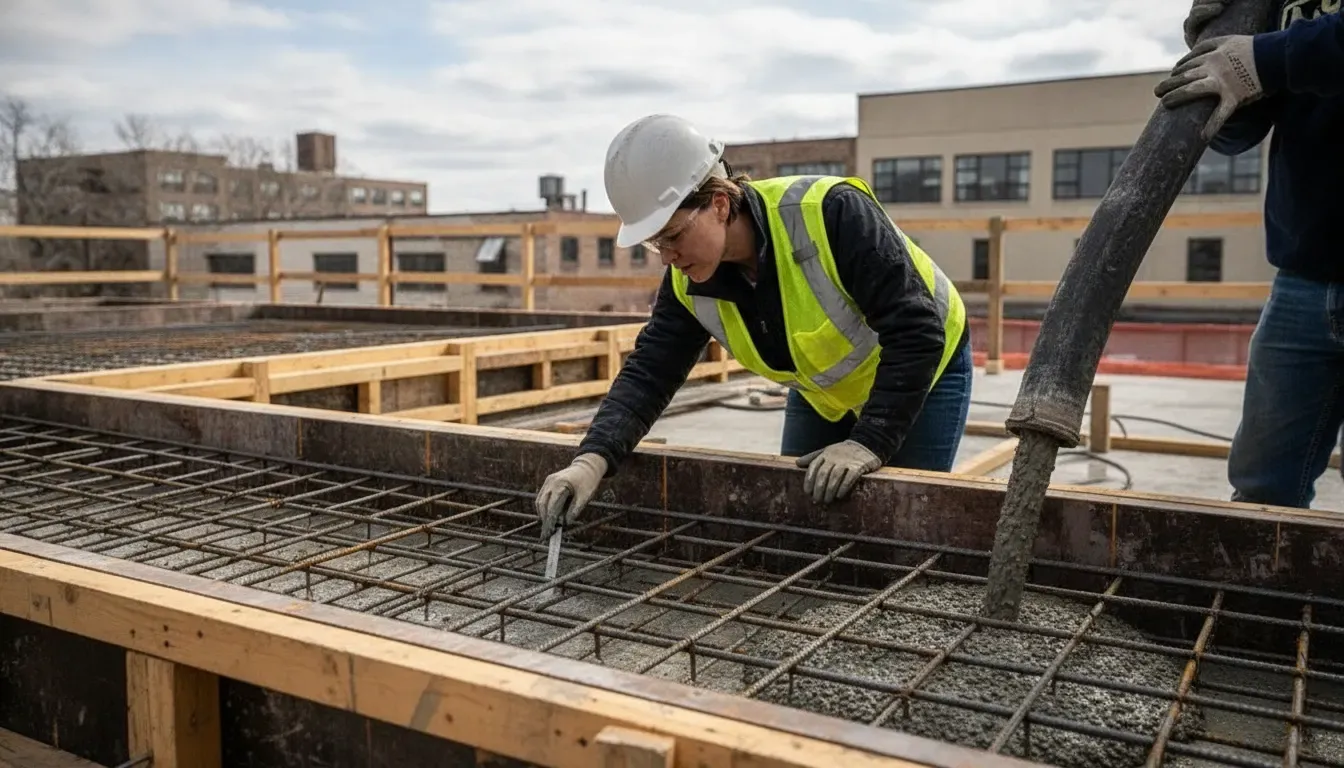
Concrete documentation should be coordinated before the placement schedule becomes urgent.
How can a Class 2 agency support a small NYC project?
AKS Architectural and Engineering Services LLP operates EZTR1.com as a Class 2 Special Inspection Agency focused on small clients and projects under approximately 4,000 square feet. That positioning matters for project teams that need practical compliance coordination without the scale or process of a large-building inspection program.
For a TR3-related assignment, the agency's useful role is to help the owner, contractor, architect, or engineer understand the service scope, organize project information, and coordinate the inspection or reporting needs that apply to the job. The agency does not replace the registered design professional's approval, the owner's statement, the producer's information, or the licensed concrete testing laboratory's responsibilities.
EZTR1 publishes a TR-3 Concrete Design Mix service with a listed price of $2,500.00. That customer-facing service price is separate from NYC DOB filing fees, which the Department's concrete requirements page lists as $130.00 per TR2 or TR3 form per submission. Confirm the current service scope, filing responsibilities, and project-specific requirements before ordering.
The online service model is designed for owners, general contractors, architects, and engineering firms that want a direct way to start a small or mid-size compliance request. Customers can provide the BIS job number or address requested on the product page, then confirm any project details the service team needs.
Takeaway: A Class 2 agency can make a small-project compliance workflow more manageable, but it should support the responsible design, owner, producer, and laboratory parties rather than stand in for them.
TR3 concrete design mix approval NYC: frequently asked questions
What is the difference between TR2 and TR3?
TR2 addresses concrete sampling, testing, and compression test cylinders, including the laboratory responsible for those activities. TR3 identifies the concrete design mixes planned for the job and records the related strength, proportioning, material, and supporting-report information.
When must the TR3 be filed?
NYC DOB states that the TR3 must be filed before permit issuance on jobs in which concrete will be used. Confirm the current filing sequence with the applicant of record and the licensed concrete testing laboratory.
Who submits the TR3?
NYC DOB identifies a Department-licensed concrete testing laboratory as the submitting party for the TR3. Other project participants still provide required information, statements, signatures, or approvals.
What documents support a TR3?
The report requires trial-mixture reports or field-experience results, depending on how the mix proportions were established. The form also requests project location details, laboratory information, strength requirements, material data, and other mix properties.
How much does the EZTR1 TR3 service cost?
EZTR1's TR-3 Concrete Design Mix product page lists a service price of $2,500.00. NYC DOB filing fees are separate and may change, so confirm both the service scope and current Department fees before submitting.
Does a TR3 replace a design professional or laboratory?
No. The TR3 workflow includes separate responsibilities for the design applicant, owner, concrete producer, and licensed concrete testing laboratory. A service agency can help coordinate the process, but it does not erase the responsibilities assigned to those parties.
Takeaway: The TR3 is easiest to manage when the project team confirms timing, roles, attachments, signatures, and fees before the permit package is submitted.
Plan the TR3 before the permit deadline
TR3 concrete design mix approval in NYC is a pre-permit coordination task with technical, filing, and stakeholder requirements. Start with the concrete scope and project identifiers, select the licensed testing laboratory, collect mix documentation, assign each signature, and verify the report against the approved construction documents. For a small or mid-size NYC project, early coordination can keep a required filing from becoming a last-minute obstacle to the work schedule.
NYC requirements can change, and project-specific responsibilities depend on the filing. Use the current NYC DOB forms and DOB NOW instructions, then confirm the applicable workflow with the design professional, filing representative, and licensed laboratory.
Takeaway: A complete TR3 plan connects the mix design, project documents, responsible parties, and permit schedule before concrete work begins.


Comments