NYC Building Code 2022 Key Changes for Special Inspections

Updated: 7 days ago
Navigating the landscape of New York City construction and development requires a precise understanding of the city's complex regulatory framework. With the full implementation of the latest updates, the NYC Building Code 2022 key changes have introduced significant shifts in how special inspections, progress inspections, and overall construction compliance are executed. For building owners, general contractors, developers, and architects, adapting to these updated requirements is essential to prevent costly DOB violations, stop-work orders, and project delays.
As a registered Class 2 Special Inspection Agency with 40 years of NYC construction-industry experience, AKS Architectural & Engineering Services LLP provides transparent, digital-first compliance solutions. The firm operates under the assumed name EZTR1.com. This combination of deep code expertise and online convenience helps small-to-mid-size projects stay compliant without the traditional quote delays common among sole practitioners.
At a glance: The 2022 NYC Building Code updates have expanded Chapter 17, introducing twelve entirely new special inspection categories. These range from structural timber compliance to Tenant Protection Plan audits. To keep your project on schedule, you must engage a registered Special Inspection Agency (SIA) to perform these mandatory checks. For small and mid-size projects up to 4,000 square feet, securing quick online scheduling and straightforward click-and-pay menu pricing eliminates the traditional weeks-long quote delays.
Need immediate special inspections or compliance support for your NYC project? Schedule your special inspections online with EZTR1.com today and secure transparent, menu-based pricing in minutes.
Nyc Building Code 2022 Key Changes: What Are the New Special Inspections Under the 2022 Code?
The 2022 NYC Building Code (Chapter 17, Section 1705) significantly expanded the scope of mandatory inspections. These additions ensure modern structural safety, fire protection, and environmental compliance. Below are the twelve key special inspection items introduced under the 2022 code:
- Open-web Steel Joists and Joist Girders (BC 1705.2.7):
Mandates detailed verification of joist placement, bridging, and welding connections.
- Wood - Seismic Resistance (BC 1705.5.5):
Requires inspection of structural wood assemblies designed to resist lateral seismic forces.
- Construction Utilizing CLT or SCL, Type IV (BC 1705.5.6):
Sets rigorous standards for mass timber structures, focusing on Cross-Laminated Timber (CLT) and Structural Composite Lumber (SCL).
- Prestressed Rock and Soil Anchor (BC 1705.8):
Introduces verification for specialized deep foundation and lateral support anchoring systems.
- Designated Seismic Systems (BC 1705.12.1):
Mandates testing and inspection of active life-safety systems designed to remain functional during an earthquake.
- Access Floors (BC 1705.12.2):
Requires compliance audits for elevated floor assemblies used in commercial and technical spaces.
- Plumbing, mechanical, fuel gas, and electrical components (BC 1705.12.3):
Enhances oversight for active utility and mechanical components, ensuring structural anchorage and seismic restraint.
- Anchorage of Storage Racks (BC 1705.12.4):
Focuses on commercial warehouses and retail storage racking systems to prevent structural collapse under load.
- Construction operations influencing adjacent structures (BC 1705.25.2):
A critical addition for NYC's dense urban environment. Requires inspections where construction operations like excavations or underpinning may structurally affect adjacent buildings.
- Tenant Protection Plan Compliance (BC 1705.26):
Mandates independent audits verifying that active construction projects in occupied buildings strictly follow the registered Tenant Protection Plan (TPP).
- Non-potable Water Systems (BC 1705.38):
Standardizes inspections for graywater, rainwater harvesting, and recycled water systems.
- Exhaust and Vent Systems in plenums and ducts (BC 1705.39):
Governs specialized ventilation and air-distribution routing to ensure optimal smoke and fire control.
For most projects. Two of these new inspections stand out as major operational challenges: the Construction Operations Influencing Adjacent Structures (BC 1705.25.2) and Tenant Protection Plan Compliance (BC 1705.26). In NYC's tight physical layouts, any structural modification or excavation near property lines now triggers the adjacent structures inspection. This inspection requires a registered design professional to draft protective plans and sequences. These must be verified on-site by the Special Inspection Agency at least twice, at a pre-construction meeting and during active construction operations.
2014 Code vs. 2022 Code: Major Special Inspection Changes
The following table shows the most impactful structural changes between the 2014 and 2022 construction codes for special inspections:
Aspect | 2014 NYC Building Code | 2022 NYC Building Code |
New Inspection Categories | No dedicated categories for mass timber, adjacent structures, or TPP compliance. | 12 new categories added, including CLT (BC 1705.5.6), adjacent structures (BC 1705.25.2), and TPP (BC 1705.26). |
Adjacent Structure Monitoring | Not a standalone special inspection requirement. | Mandatory under BC 1705.25.2 for any operation that may affect neighboring buildings. |
Tenant Protection Plan Inspections | LL 1/2004 required a plan but no weekly SI audit mandate. | Weekly compliance inspections required under BC 1705.26 for occupied buildings undergoing construction. |
Seismic Requirements | Limited to select structural elements. | Expanded to cover wood seismic resistance (BC 1705.5.5), designated seismic systems (BC 1705.12.1), and anchorage of storage racks (BC 1705.12.4). |
Plumbing and Mechanical Oversight | Minimal SI requirements for MEP systems. | BC 1705.12.3 now covers plumbing, mechanical, fuel gas, and electrical components for anchorage and restraint compliance. |
Registration Deadlines | Agencies could self-certify for most existing categories. | BB 2022-014 requires full accreditation by approved bodies; grace period expired November 2023. |
These changes collectively make the 2022 code the most aggressive NYC building regulatory reform since the 2008 introduction of the modern Chapter 17 framework. Builders and agency partners must be proactive to keep projects on track.
How Do the 2022 NYC Building Code Changes Impact Small to Medium Projects?
A common misconception is that sweeping code updates like the NYC Building Code 2022 key changes only apply to high-rise developments or massive infrastructure projects. In reality, the 2022 code applies to all new filings, regardless of project scale. If you are executing any of the following small-to-medium-sized projects (typically under 4,000 square feet), these code updates will directly impact your path to a Certificate of Occupancy:
- Commercial retail and restaurant fit-outs:
Alterations involving exhaust hoods, structural framing adjustments, or access floor installations now face stricter utility anchorage and mechanical plenum inspections.
- Brownstone renovations:
Historic NYC brownstones and townhouses are highly vulnerable to adjacent work. If you are conducting excavations, underpinning, or structural remodeling, BC 1705.25.2 requires active adjacent-structure monitoring.
- Apartment interior alterations:
Standard apartment combinations or layout adjustments must strictly comply with local safety and Tenant Protection Plans if the building remains occupied.
- Commercial extensions and additions:
Adding a floor, extending a rear commercial facade, or installing structural signs requires complete compliance with seismic anchorage and structural wood framing rules.
To keep compliance costs manageable, understanding Special Inspection Agency classifications is vital. Under the NYC administrative rules, agencies are classified as Class 1 (authorized to perform inspections on any building) or Class 2 (authorized to inspect buildings of limited size. Typically under 10,000 square feet and 75 feet in height). AKS Architectural & Engineering Services LLP is a registered Class 2 Special Inspection Agency. This focus makes AKS highly efficient and cost-effective for small-to-mid-size projects under 4,000 square feet. Ensuring you do not pay the premium rates charged by large Class 1 agencies that cater exclusively to high-rises.
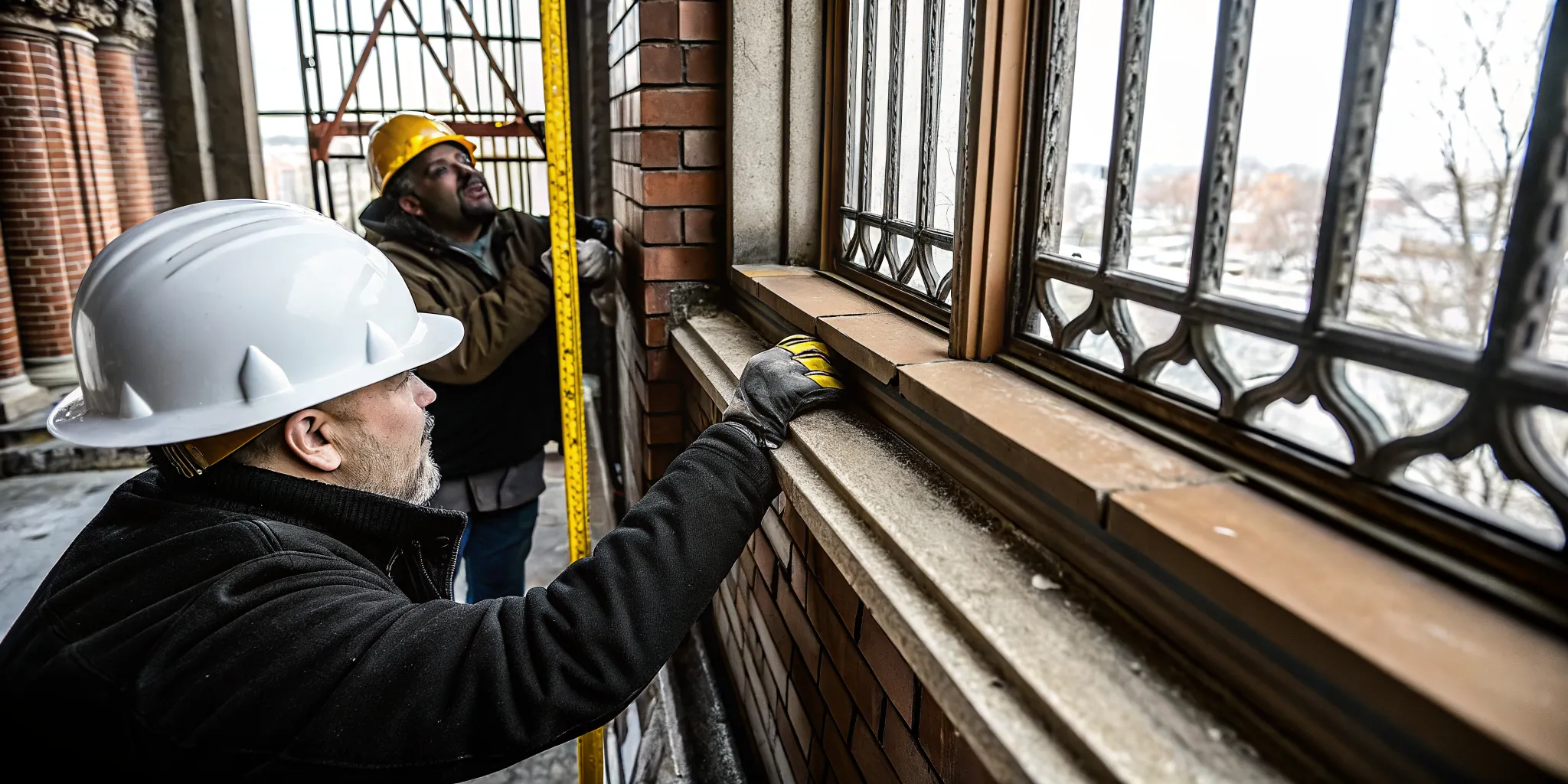
Structural monitoring and adjacent structure inspections protect historic NYC brick facades and brownstones during localized renovations.
Registration and Accreditation Requirements: What Builders Need to Know
When the 2022 code took effect on November 7, 2022, the NYC Department of Buildings (DOB) provided a brief transitional period. Under Buildings Bulletin 2022-014 (BB 2022-014) and subsequent updates to 1 RCNY 101-06. Special Inspection Agencies were granted a temporary grace period to perform the new inspections if they held prior-code registrations for similar categories. However, that grace period has fully elapsed as of November 2023.
Today, any Special Inspection Agency performing any of the twelve new 2022 special inspections must be formally registered and accredited with the DOB for those exact categories. For Class 1 agencies, accreditation via an approved body like IAS or ANSI is mandatory. Class 2 agencies must hold active registration and qualification records with the DOB as well.
Filing a Technical Report (TR1 or TR8) under an agency that lacks the precise 2022 accreditation will trigger an immediate rejection in the DOB NOW: Build portal. This can halt your construction permit approvals, cause immediate stop-work orders during active construction, or delay the final Certificate of Occupancy. AKS Architectural & Engineering Services LLP maintains complete registration and accreditation for the Class 2 special inspections required to keep your project fully compliant and moving forward.
How Can You Ensure Proactive Construction Compliance and Avoid Violations?
In NYC's high-stakes construction environment, being reactive is expensive. Waiting until a DOB inspector issues a violation or a stop-work order can cost tens of thousands of dollars in lost labor, emergency engineering fees, and administrative penalties. Proactive compliance is the only way to safeguard your investment.
To avoid violations under the updated code, follow these three steps:
Conduct a thorough pre-filing review:
Ensure your registered design professional identifies all required TR1 (Special Inspections), TR8 (Energy Inspections), and progress inspections during the planning phase. Utilize our
updated NYC building code requirements checklist
to track progress.
- Establish Tenant Protection Plan compliance early:
If you are renovating an occupied building, Local Law 1 of 2004 and Local Law 41 of 2019 mandate a comprehensive TPP. Weekly inspections under BC 1705.26 are required to protect both tenant livability and your liability.
- Partner with a digital-first inspection agency:
Traditional special inspection agencies rely on manual, slow quoting processes that take days or weeks. AKS Architectural & Engineering Services LLP has modernized this process via EZTR1.com, providing upfront menu-based pricing and online checkout. You can book inspections immediately and get technicians on-site without delay.
Compliance with the updated codes like the 2022 NYC Building Code is not optional. Failure to meet these standards results in DOB violations, which AKS actively helps clients remove. With 40 years of local expertise, AKS ensures projects are built to the latest standards, helping you navigate the DOB NOW system with absolute ease.
Ready to simplify your construction compliance? Order your Tenant Protection Plan inspections online today or browse our transparent menu-pricing for special and progress inspections.
Frequently Asked Questions About the 2022 NYC Building Code Changes
What are the major changes in the 2022 NYC Building Code for special inspections?
The 2022 code update expanded Chapter 17 to introduce twelve new special inspection categories. The most impactful changes for standard projects include stricter requirements for structural stability when construction operations influence adjacent structures (BC 1705.25.2). They also include mandatory weekly audits for Tenant Protection Plan Compliance (BC 1705.26) in occupied buildings.
Are special inspections required for all NYC construction projects under the 2022 code?
No, special inspections are not required for every single construction component unless the design involves the practice of professional engineering or architecture. However, any project involving structural modifications, excavations, underpinning, mechanical installations, or Tenant Protection Plans will have automatically populated, mandatory TR1 or TR8 requirements in DOB NOW.
How do 2022 NYC Building Code updates affect progress inspections?
The 2022 updates have harmonized progress inspections with modern building envelope, fire-stopping, and energy-conservation standards. These must be meticulously logged and filed by registered professionals throughout the construction process. This verifies that the work aligns with approved plans before final sign-off.
What is the difference between TR1 and TR8 inspections under the new code?
The TR1 form (Technical Report: Special Inspections) represents the structural, mechanical, and safety inspections required under Chapter 17 of the Building Code. The TR8 form (Technical Report: Energy Code Progress Inspections) represents inspections required to verify compliance with the New York City Energy Conservation Code (NYCECC) for insulation. Lighting, and HVAC efficiency.
Where can I find the official 2022 NYC Building Code special inspection requirements?
The complete, official requirements are published in Chapter 17 of the 2022 New York City Building Code, accessible via the official NYC Department of Buildings website or UpCodes. Detailed registration and qualification rules for Special Inspection Agencies can be found in Buildings Bulletin 2022-014 (BB 2022-014) and 1 RCNY 101-06.


Comments