TR1 Non-Potable Water Systems Inspection NYC Guide

Updated: 6 days ago
Non-potable water systems can capture and treat sources such as stormwater, roof-collected rainwater, gray water, foundation drainage, or clear water waste for onsite or local reuse. Because these systems combine plumbing, treatment, storage, and cross-connection controls, inspection planning should begin with the approved construction documents and the project filing, not with a generic checklist.
A TR1 non-potable water systems inspection NYC review generally verifies applicable system components, required tests, labels, safety signage, and installation against approved documents and manufacturer instructions. NYC Building Code Section 1705.38 and the New York City Plumbing Code establish the inspection and testing framework. But exact applicability depends on the approved plans, permits, code requirements, and DOB filing selections.
For owners, architects, engineers, and contractors, the practical goal is to align the system design, test records, inspection responsibilities, and filing documentation before closeout. The first step is understanding what this inspection covers and how it differs from other TR1 and special-inspection obligations.
What Is a TR1 Non-Potable Water Systems Inspection in NYC?
A TR1 non-potable water systems inspection in NYC connects two related compliance functions: a special inspection of the installed system and the project team's reporting of required inspections through the TR1 process. The inspection itself is governed by Section 1705.38 of the NYC Building Code. Titled "Special Inspection for Nonpotable Water Systems." The section directs testing and inspection to Chapter 13 of the New York City Plumbing Code. So the scope is not limited to a general visual walk-through.
That distinction matters. A TR1 is a reporting record for required progress and special inspections; it is not a substitute for the technical inspection or testing. The applicable approved construction documents, permit, and code requirements determine whether a particular nonpotable water system inspection must be listed and reported. Project teams should therefore confirm the classification and filing requirements with the registered design professional and the applicable DOB process rather than assuming that every water-reuse installation automatically creates the same TR1 obligation.
Under Section 1705.38, the special inspector witnesses the tests required by Chapter 13 of the Plumbing Code. The code also identifies testing provisions in Sections 1705.38.1.1 through 1705.38.1.2. For example, water storage tanks and roofwashers have referenced testing requirements under Plumbing Code Sections 1302.12.2, 1303.15.4, and 1303.15.2, as applicable to the system. The exact test sequence depends on the equipment and the approved design.
The inspection also includes a visual review of applicable system components. The inspector checks whether components are complete in accordance with the manufacturer's instructions and the approved construction documents. This can include confirming that required labeling, operating instructions, and safety signage are posted. Inlets and vents are inspected under the referenced Plumbing Code provisions for protection against vermin and insects.
In practical terms, the inspector documents whether the installed system matches the approved design and whether required tests have been witnessed. The project filing team then uses the resulting inspection information in the required reporting workflow. For a broader explanation of how the categories differ, see this guide to special vs progress inspections in NYC.
Takeaway: A non-potable water systems inspection is a code-based special inspection, while the TR1 records the applicable inspection status and results. The approved documents, permit, and applicable code determine how the inspection must be reported.
Which Systems and Projects May Trigger the Inspection?
A non-potable water system inspection is not triggered simply because a project contains plumbing work. The applicable requirement depends on the approved construction documents, permit, work type, code edition, and the inspection selections made in the DOB filing. The architect, engineer, filing representative, and owner should confirm the scope before construction reaches the relevant milestone.
For projects covered by the applicable provisions, NYC Building Code Section 1705.38 addresses special inspection for non-potable water systems. The associated testing requirements refer to Sections 1705.38.1.1 through 1705.38.1.2, while testing and inspection must follow Chapter 13 of the New York City Plumbing Code. The code language makes the scope system-specific, so a project team should compare the planned installation with the approved documents rather than rely on a general checklist.
Examples of components that may be included
Depending on the approved system, the inspection may involve items such as water storage tanks and roofwashers. Water storage tanks have testing requirements under NYC Plumbing Code Sections 1302.12.2 and 1303.15.4. Roofwashers are tested under Section 1303.15.2. These are examples, not an exhaustive list of every system or component that may require review.
The visual portion of the inspection also considers applicable system components for completeness against the manufacturer's instructions and approved construction documents. Where applicable, the review includes required labeling, operational instructions, and safety signage. Inlets and vents are inspected under the referenced Plumbing Code provisions, including requirements related to vermin and insect protection. These details can affect readiness even when the principal equipment has already been installed.
Project teams should also understand what the system is designed to do. NYC Health describes non-potable systems as systems that capture and treat water generated within or around a building, such as stormwater. Roof-collected rainwater, gray water, foundation drainage, or clear water waste, for onsite or local reuse rather than human consumption. NYC Health's Nonpotable Water Systems Guidance Manual provides additional information on design, maintenance, monitoring, and related planning considerations.
Before assuming an inspection applies, review the permit and approved plans with the design professional and confirm the selected inspection category in the DOB filing. This NYC construction permit guide can help orient the review, but it does not replace project-specific code and filing analysis.
Takeaway: Water storage tanks, roofwashers, inlets, vents, and other components may be part of the inspection. But the approved plans, permit, applicable code edition, and DOB filing determine the actual project scope.
Checkpoint | What to confirm | Who should coordinate |
Approved scope | System components, tests, and inspection category shown in the approved documents and filing. | Owner, design professional, and filing representative |
Installation readiness | Applicable equipment is complete, accessible, labeled, and ready for required testing. | Contractor and site team |
Reporting record | Inspection results and supporting records align with the applicable DOB filing. | Inspection agency and filing team |
How Does the DOB NOW Filing Context Work?
DOB NOW is the filing environment used for many NYC Department of Buildings submissions. But a project team should not assume that the system itself answers every scope question. The filing context still has to be read alongside the approved construction documents, the applicable code edition, and the technical requirements for the installed system. For non-potable water systems, that review matters because the inspection record should reflect what the project actually includes. Such as required labels, operating instructions, safety signage, inlets, vents, and other applicable components.
For background on how inspection documentation fits into the broader compliance process, see these NYC TR1 form requirements. The TR1 is not a substitute for reviewing the project-specific filing and approved documents. It is part of a coordinated record of required inspections and results.
Mandatory, conditional, and manually added reports
Technical reports in DOB NOW generally fall into three practical categories. A report may be mandatory because the filing and code requirements identify the inspection as required. It may be conditional because it applies only when the project includes a particular system, design, or scope of work. It may also need to be added manually when the applicable requirement is not fully represented by a default selection. That is why the design professional or filing representative should confirm the filing selections rather than relying on an assumption that DOB NOW automatically determines every inspection requirement.
For a non-potable system, the inspection record should connect the filing to the system shown in the approved construction documents. Applicable review items can include required labeling and operational instructions, as well as protection at system inlets and vents. These details are identified in the NYC Plumbing Code provisions summarized in the source material, including the requirements for vermin and insect protection where applicable. NYC Building Code and Plumbing Code references should be checked against the current project documents and code requirements.
Which code edition applies?
Project teams may encounter filings tied to different NYC Construction Code editions. The applicable edition is a project-specific determination, not a choice to make from the inspection topic alone. Confirm the code basis used for the filing and make sure the inspection language, report type, and supporting documents are consistent with it. If the filing, plans, or system design are unclear, resolve that question with the responsible design professional before the inspection is scheduled.
Takeaway: Treat DOB NOW as one part of the compliance record: verify the applicable code and project documents. Determine whether the report is mandatory or conditional, and manually confirm any technical report that the filing does not clearly capture.
What Should Project Teams Prepare Before the Inspection?
Good preparation makes the inspection a focused verification rather than a search for missing information. The project team should confirm what the approved documents and permit require, then make the relevant work accessible at the correct construction milestone. For a non-potable water system, the inspection may include visual review of applicable components, required testing, and checks against manufacturer instructions and approved construction documents.
Review the approved documents and permit.
Start with the approved construction documents, permit, and applicable filing selections. Confirm whether the planned work includes a non-potable water system inspection and identify the components, tests, and inspection milestones shown in the project record. Requirements depend on the approved scope and applicable code, so do not rely on a generic equipment list. The project team can also review this
for broader coordination context.
- Confirm the scope and milestone.
Identify the exact portion of work that is ready for review and schedule the inspection before construction passes the relevant milestone. The inspection should be coordinated with the architect, engineer, contractor. And other responsible parties so that the inspector is evaluating the intended installation, not an incomplete or changed version of it.
- Make components visible and complete.
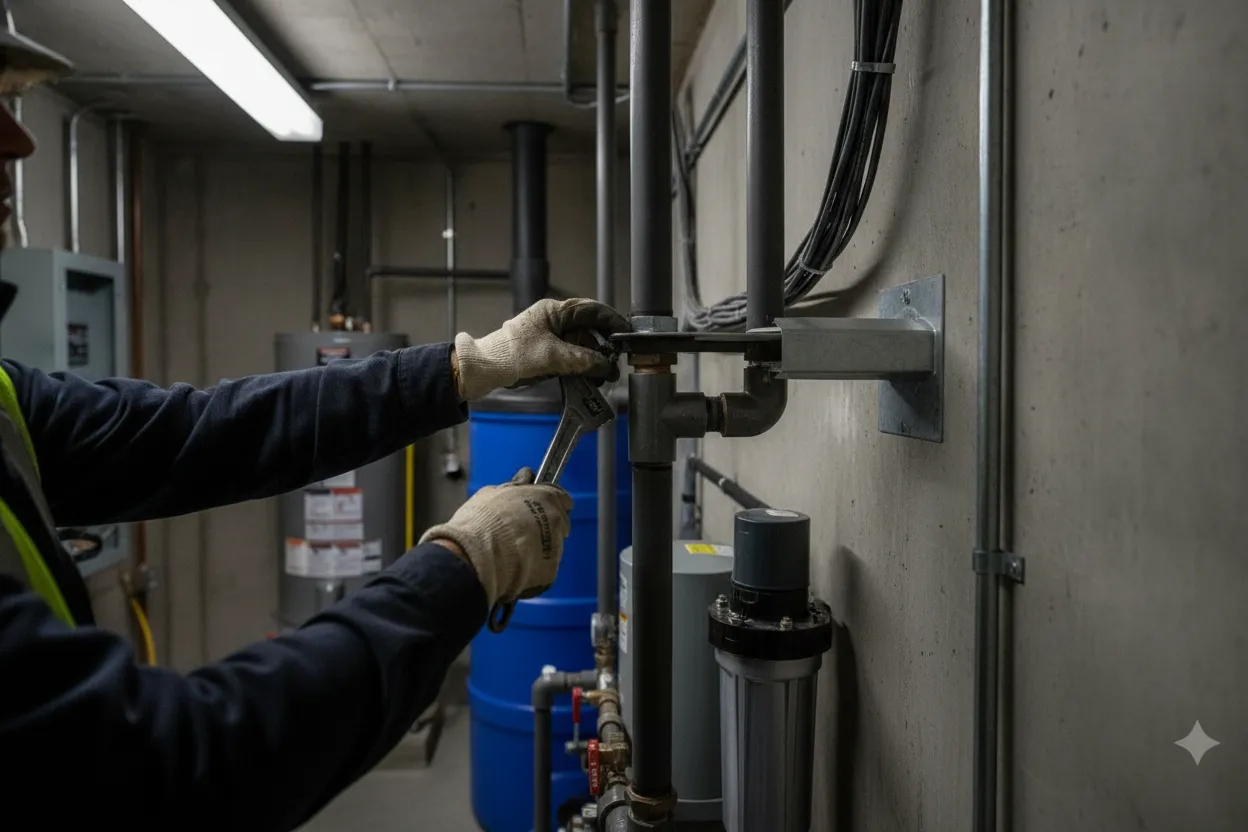
Expose the applicable system components and verify that installation is complete in accordance with the manufacturer's instructions and approved construction documents. Roofwashers, storage tanks, treatment equipment, piping, and other components should not be concealed when they still require visual review. Required tests must also be ready to be witnessed where applicable.
- Check labels, instructions, and protective details.
Before the visit, confirm that required labeling, operational instructions, and safety signage are posted. Review system inlets and vents for the applicable protections, including measures addressed by the New York City Plumbing Code. These details are easy to overlook when the team focuses only on major equipment.
- Coordinate access and notice.
Arrange access to every relevant room, roof area, tank, equipment location, inlet, vent, and testing point. Confirm who will be present to answer installation questions and provide documents. Allow at least 48 hours advance notice, as stated in the EZTR1 service process, and complete any required payment before scheduling.
Takeaway: Prepare the documents, milestone, completed components, safety details, access plan, and notice before requesting the inspection. This gives the inspector a clear basis for evaluating the installed system and helps the project team address gaps before they affect closeout.
What Common Coordination Mistakes Can Delay Closeout?
Closeout problems often begin before the inspection is scheduled. A project team may have ordered an inspection service, but that does not replace reviewing the approved construction documents. Applicable code requirements, and the actual condition of the installed system. NYC Building Code Section 1705.38 calls for visual review of applicable nonpotable water system components against manufacturer instructions and approved construction documents. The code text identifies that inspection scope, rather than treating a service-page description as a project-specific plan review.
Scheduling before the work is ready
Do not request the inspection while required components are still incomplete, inaccessible, or covered by finishes. The inspector must be able to review the installed work and, where applicable, witness required tests under Chapter 13 of the NYC Plumbing Code. Coordinate with the plumbing contractor and superintendent so tanks, roofwashers, inlets, vents, treatment equipment, and related components can be examined in the condition shown by the approved documents. If the work cannot be seen or tested, the visit may not resolve the closeout requirement.
Overlooking labels and system safeguards
Missing labels, operating instructions, or safety signage are another avoidable issue. Section 1705.38 includes properly posted labeling and signage where applicable. Teams should also confirm that inlets and vents have the required protection under the referenced Plumbing Code provisions. These details are part of a usable and compliant system, not cosmetic items to address after the inspection.
Confusing inspection types
A special inspection of a nonpotable water system is not automatically the same as a progress inspection. The special inspector witnesses required tests and reviews applicable components, while progress-inspection obligations arise from the project's filing and code requirements. Confirm the inspection category in the approved documents and coordinate the responsible parties before assuming one report covers every obligation.
Finally, a populated DOB NOW record is not by itself the complete legal analysis. Applicability depends on the approved plans, permit, adopted code, and filing selections. NYC Health's guidance also addresses design considerations such as water budgets and treatment standards. Which may affect project coordination even when the team is focused narrowly on the DOB filing.
Takeaway: Confirm the approved scope, expose complete work, verify labels and safeguards, distinguish special inspection from progress inspection, and review the full filing and code context before scheduling closeout.
How Can You Coordinate a Non-Potable Water Systems Inspection?
Coordination should begin while the project team is reviewing the approved construction documents, permit, and applicable filing requirements. Owners and general contractors can identify the inspection scope with the architect, engineer, or filing representative, then confirm when the system will be accessible and ready for review. NYC Health guidance explains that non-potable water systems must comply with current New York State and City requirements, including the NYC Department of Buildings Construction Codes. The NYC Health guidance manual also addresses design, maintenance, and monitoring considerations.
For a practical service handoff, the project team can use the AKS Architectural and Engineering Services LLP inspection process through EZTR1, its operating name and service division:
- Confirm scope:
Share the approved plans and relevant permit information so the inspection type and applicable system components can be identified.
- Coordinate readiness:
Confirm that the applicable installation, tanks, roofwashers, inlets, vents, labels, and safety features are accessible when the inspection is scheduled. The exact checklist depends on the system and approved documents.
- Plan testing:
Required testing should follow the NYC Plumbing Code. Cross-connection prevention, treatment standards, and the project's water budget may also be relevant design considerations under NYC Health guidance.
- Schedule early:
EZTR1 states that inspections require at least 48 hours advance notice and payment before scheduling. Build that notice into the construction schedule rather than waiting until closeout.
- Coordinate records:
Confirm with the filing representative how inspection results and supporting documentation will be incorporated into the project's DOB filing and closeout process.
When the scope is confirmed, use the non-potable water systems inspection service page to begin the AKS/EZTR1 coordination process. If the approved documents do not clearly identify the requirement, the design professional and filing representative should resolve that question with the applicable DOB requirements before work proceeds.
Takeaway: Early document review, milestone planning, system readiness, and clear filing coordination help prevent a non-potable water systems inspection from becoming a late closeout issue.
Frequently Asked Questions
Does every non-potable water system require a TR1 inspection?
Not automatically. The approved construction documents, permit, applicable NYC Construction Code requirements, and DOB filing selections determine whether the project requires a special inspection, a progress inspection, or both. Confirm the classification with the project design professional before construction reaches the relevant milestone.
What systems can be considered non-potable water systems in NYC?
Examples include systems that capture and treat gray water, stormwater, roof-collected rainwater, foundation drainage, or clear water waste for onsite or local reuse. NYC Health describes these systems as serving uses that are not intended for human consumption. NYC Health guidance provides additional context.
What does the inspector review during the inspection?
The scope depends on the approved documents and the system design. It can include visual review of applicable components for completeness against manufacturer instructions and approved construction documents. Required labeling and safety signage, and witnessing tests required by Chapter 13 of the NYC Plumbing Code. The applicable code provisions should be confirmed for the specific filing.
What should a project team prepare before scheduling?
Gather the approved plans, permit information, system specifications, manufacturer instructions, and the identified inspection milestone. Make sure the relevant work is accessible and ready for review, coordinate site access, and confirm the filing responsibilities with the design professional. EZTR1 states that inspections require at least 48 hours advance notice, with payment before scheduling.
Who is responsible for the DOB filing?
Filing responsibility depends on the project team and the applicable DOB process. The owner, registered design professional, contractor, and inspection agency may have different documentation or submission roles. Confirm the current DOB NOW requirements and keep the inspection report and supporting records aligned with the approved filing.
Get started with the right inspection scope
Clear coordination begins with matching the inspection to the approved plans, filing details, and project documents. Review the service details, then get started with a non-potable water systems inspection through EZTR1. The service page provides a direct place to review the offering and begin coordinating the scope, supporting documents, and scheduling for your NYC project.


Comments